

Last Updated on September 23, 2026 by juliettemarshall
A domestic long hair cat is a mixed-ancestry house cat with a long or semi-long coat, not a standardized breed. Size, color, and personality vary widely. Most need frequent brushing, routine veterinary care, play, measured nutrition, and close attention to mats, hairballs, dental health, parasites, and weight.
Longhaired house cats can look as distinctive as pedigreed breeds, yet their backgrounds are usually far less predictable. Their varied ancestry produces many coat colors, body types, eye colors, and temperaments. That variety means owners should focus on the individual cat rather than expecting one fixed personality or appearance.
| Key fact | What U.S. owners should know |
|---|---|
| Classification | Mixed-ancestry cat type rather than a standardized breed |
| Typical weight | Often around 8–15 pounds, although individuals can fall outside that range |
| Lifespan | Common references place the range around 12–18 years or longer |
| Coat | Long or semi-long, with many colors, patterns, and textures |
| Temperament | Highly individual, from social and playful to quiet and independent |
| Grooming | Usually several sessions weekly; mat-prone coats may need daily care |
| Shedding | Moderate to heavy, depending on coat density and season |
| Allergy friendly | No; coat length does not make a cat hypoallergenic |
| Best fit | Owners prepared for regular coat care and routine preventive veterinary care |
Petfinder lists a common adult weight of 8–15 pounds and a lifespan of 15–17 years. VCA gives a broader lifespan range of 12–18 years, reflecting the variation within these cats.
Table of Contents
Key Takeaways
- These cats are classified by coat and mixed ancestry rather than a formal breed standard.
- Personality and adult size can differ considerably from one individual to another.
- Long coats usually need brushing several times weekly, with some cats benefiting from daily grooming.
- Mats, swallowed hair, body weight, dental health, and parasites deserve routine attention.
- A fluffy appearance alone cannot confirm Maine Coon, Persian, or another pedigreed ancestry.
What Is a Domestic Long Hair Cat?
A domestic long hair cat is generally a mixed-breed feline whose most obvious shared feature is longer fur. Major registries do not treat the label like a standardized pedigree breed. VCA and Petfinder both describe these cats as a type rather than a single predictable breed.
Long hair is associated with inherited genetic variants affecting the hair-growth cycle. The long-coat trait is recessive, according to genetic information compiled by OMIA. Two cats can therefore carry long-hair genetics without every kitten developing a long coat.
This mixed background also explains why two DLH cats can look unrelated. One may have a thick neck ruff and bushy tail, while another has fine, silky fur. Their faces, legs, body proportions, and eye colors can differ as well.
Appearance, Size, and Coat Characteristics
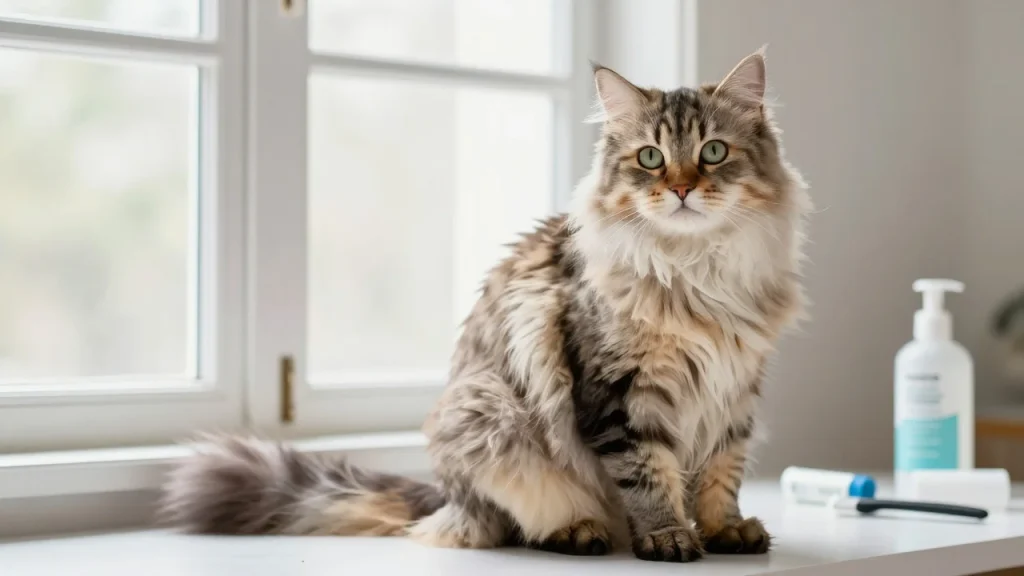
Most longhaired mixed-breed cats have medium builds, but there is no official size standard. Petfinder uses 8–15 pounds as a general weight range. VCA reports a wider range, showing why individual body condition matters more than a breed-style target.
Their coats can appear in virtually every familiar feline color and pattern. Tabby, solid, bicolor, tortoiseshell, smoke, and calico appearances are all possible. Fur texture can also range from relatively silky to dense and cottony.
Coat texture affects grooming needs more than appearance alone. Dense undercoats can form tight tangles near the armpits, belly, chest, and hindquarters. Softer coats may remain manageable with less frequent combing.
Personality and Temperament
There is no single Domestic Long Hair personality because these cats do not share one controlled breeding history. VCA describes temperaments ranging from friendly and playful to shy, quiet, independent, or aloof. Petfinder likewise notes substantial variation between individuals.
For an adopter, the individual cat’s behavior gives better guidance than coat length. Observe how the cat responds to handling, unfamiliar people, toys, food, and other animals. Shelter staff or foster families may also provide useful behavior history.
Age and previous experiences can shape behavior alongside genetics. A confident kitten may become an outgoing adult, while another cat may prefer quieter interactions. Consistent routines and positive handling can help a new companion settle into the household.
How Much Grooming Does a Longhaired House Cat Need?
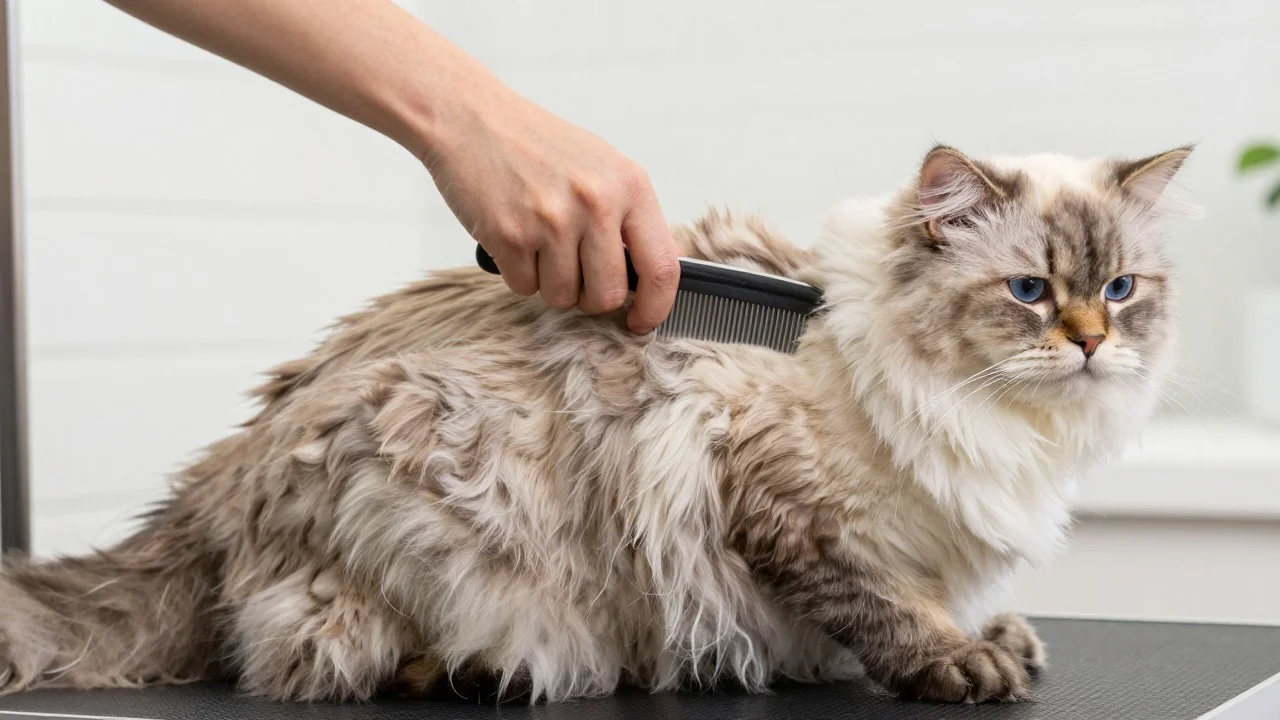
Regular grooming is the main care difference between longhaired and shorthaired mixed-breed cats. The ASPCA recommends grooming indoor long-haired cats every few days to remove dead hair and prevent tangles. VCA recommends daily brushing for coats that readily develop mats.
Begin with short sessions when the cat is calm. Use a cat-safe comb or brush and work gently through the coat without pulling. Pay special attention behind the ears, under the front legs, around the belly, and near the hindquarters.
Never pull hard on a tight mat or place scissors close to the skin. Cat skin can be thin and easily injured beneath tangled fur. VCA advises seeking professional grooming help for severe matting rather than cutting mats out at home.
Brushing also removes loose fur before the cat swallows it during self-grooming. Cornell recommends daily brushing and combing to reduce hairball development, particularly in long-haired cats. Repeated unproductive retching, loss of appetite, or unusual lethargy warrants veterinary attention.
Long coats can also hide small skin problems and external parasites. Readesh’s guide to checking dogs and cats for ticks explains how to part dense fur and inspect the skin methodically. U.S. owners should ask their veterinarian which parasite preventives match local risks.
Shedding can leave noticeable fur around a home even with consistent brushing. Readesh also covers pet-friendly flooring for busy households if easier cleaning and scratch resistance matter in your home. Regular vacuuming and washable bedding can make coat maintenance easier.
Food, Exercise, and Everyday Care
A long coat does not require a special diet by itself. Feed a complete, balanced food appropriate for the cat’s age and health needs. Portion size should reflect body condition, activity, calorie density, and veterinary guidance.
AAHA feline guidance recommends tracking body weight and body condition throughout a cat’s life. Small changes can be difficult to see beneath thick fur. Running your hands over the ribs and waist can make changes easier to notice.
Daily activity also supports healthy weight and normal feline behavior. Interactive toys, climbing spaces, scratching surfaces, and short play sessions provide useful movement. Rotate activities occasionally so an indoor cat keeps encountering new challenges.
Keep fresh water available and maintain clean, accessible litter boxes. Cats often hide discomfort, so changes in eating, drinking, elimination, mobility, or social behavior deserve attention. A sudden decline in grooming can also signal illness, pain, or reduced mobility.
Health Needs and Lifespan
Because this label covers mixed-ancestry cats, there is no single breed-specific disease profile that applies to every individual. Their unknown family histories can also make inherited risks difficult to predict. Preventive veterinary care therefore matters even when a cat appears healthy.
AAHA and AVMA guidance recommends regular physical examinations, dental assessment, nutritional evaluation, parasite prevention, and individualized vaccination planning. Earlier guidelines specify at least annual veterinary examinations for cats, with more frequent visits when individual needs warrant them.
Dental health deserves particular attention because oral disease can remain difficult for owners to detect. AAHA recommends lifelong dental care and regular oral assessment. Home tooth brushing can be introduced gradually when the cat accepts it.
A frequently cited lifespan for a domestic long hair cat is roughly 12–18 years, although individuals may live shorter or longer lives. Genetics, nutrition, body condition, preventive care, environment, and disease all affect longevity. VCA lists 12–18 years, while Petfinder lists 15–17 years.
Domestic Longhair vs. Maine Coon
A fluffy shelter cat is sometimes labeled a Maine Coon mix based only on appearance. That description cannot be confirmed from long fur, ear tufts, or a bushy tail alone. A Maine Coon is a defined pedigreed breed, while a DLH describes coat length and mixed ancestry.
| Feature | Domestic longhair | Maine Coon |
|---|---|---|
| Classification | Mixed-ancestry cat type | Recognized pedigreed breed |
| Adult size | Highly variable | Generally large-bodied |
| Coat | Texture and density vary | Breed-associated shaggy coat |
| Temperament | Highly individual | Greater breed-level predictability |
| Pedigree | Usually unknown | Documented in pedigreed cats |
| Identification | Appearance cannot establish ancestry | Pedigree provides reliable confirmation |
Visual similarities can still occur because ordinary mixed-breed cats express many coat and body traits. Without documented ancestry, it is safer to describe a fluffy mixed cat by observable characteristics. That approach avoids assigning a breed based on appearance alone.
Are These Cats Good Family Pets?
They can fit many households because their personalities are so varied. A sociable individual may enjoy children and other pets, while a quieter cat may prefer a calm adult home. Compatibility depends more on the specific animal than the length of its fur.
Prospective adopters should also consider the grooming commitment. Regular combing becomes a long-term responsibility rather than an occasional cosmetic task. Owners who enjoy hands-on coat care may find that routine becomes useful bonding time.
Before adopting, ask about current diet, vaccinations, parasite prevention, dental history, grooming tolerance, and known medical problems. Arrange a veterinary examination soon after bringing a new cat home. Cornell recommends having newly adopted cats examined as soon as practical.
For more general ownership topics, you can browse the Readesh pet-care section. Pair online guidance with advice from your veterinarian for decisions involving medicines, diet changes, illness, or parasite prevention.
Frequently Asked Questions
Is a Domestic Long Hair Cat a Specific Breed?
No. A domestic long hair cat is generally a mixed-ancestry cat identified partly by its long coat. VCA and Petfinder both distinguish the classification from standardized pedigreed breeds.
That distinction explains the wide differences in size and temperament. Two cats carrying the same shelter classification may share little besides coat length. Their care should therefore be adjusted to the individual.
Are Domestic Longhairs Hypoallergenic?
No cat has been shown to be truly hypoallergenic. The American College of Allergy, Asthma & Immunology states that all cats produce allergens. Hair length itself is not associated with cat allergen levels.
People with allergies react to proteins associated with sources including skin and saliva, rather than simply reacting to long fur. Anyone with significant asthma or allergy concerns should speak with an allergist before adopting. Individual reactions can vary.
How Often Should You Brush a Longhaired Cat?
Several grooming sessions each week are a practical starting point for many longhaired cats. Cats with dense coats, heavy shedding, or frequent tangles may need daily brushing. ASPCA and VCA guidance supports frequent grooming to limit tangles and matting.
Adjust the schedule after observing how quickly tangles return. Grooming should remain gentle and comfortable. Seek professional help when mats become tight or painful.
Do Longhaired Cats Get More Hairballs?
They can face greater hairball risk because more loose hair may be swallowed during grooming. Cornell specifically identifies long-haired cats as having increased hairball concerns. Routine brushing removes loose hair before much of it is ingested.
Frequent vomiting should not automatically be dismissed as normal hairballs. Repeated retching, appetite loss, or lethargy can require veterinary assessment. A veterinarian can determine whether another digestive or respiratory problem is involved.
A Healthy Coat Starts With Consistent Care
Longhaired mixed-breed cats can be affectionate, playful, independent, quiet, or anything between those descriptions. Their shared care requirement is a coat that deserves regular attention. Good grooming also gives owners frequent opportunities to notice changes in the skin, weight, and general condition.
Build brushing, play, dental care, parasite prevention, and veterinary visits into a predictable routine. Watch the individual cat rather than relying on assumptions about a breed label. That approach gives a longhaired companion the best foundation for a comfortable life in a U.S. home.