












Basic industries are the foundation of the global economy, supplying the raw materials needed for manufacturing, construction, transportation, technology, and everyday products. From metals, minerals, oil, and chemicals to lumber, agriculture, and natural fibers, these sectors power the world’s industrial growth and make modern life possible.
If you’re exploring long-term and stable career options, you may be asking: Is Basic Industries a Good Career Path? This complete guide answers that question by explaining the meaning of basic industries, providing examples of key sectors, outlining the raw materials they produce, and listing top global companies, including those operating as Inc, Ltd, IIC, and Pte Limited.
Table of Contents
Is Basic Industries a Good Career Path? Overview of Materials, Careers, and Leading Companies
| Category | Key Materials / Products | Career Opportunities | Examples of Top Companies |
| Mining and Metals | Iron, gold, copper, coal, lithium | Mining engineers, geologists, heavy equipment operators, and safety managers | Rio Tinto Ltd, BHP Ltd, Newmont Mining Inc. |
| Agriculture and Farming | Wheat, corn, sugarcane, cotton, fruits, livestock | Agronomists, farm managers, agricultural technicians, and irrigation specialists | Cargill Inc., Wilmar Pte Limited |
| Oil, Gas, and Energy | Crude oil, natural gas, coal, and renewable energy | Petroleum engineers, drilling operators, refinery technicians, pipeline inspectors | ExxonMobil Inc., Saudi Aramco, Oceania Gas Pte Limited |
| Chemical Industry | Fertilizers, petrochemicals, plastics, industrial gases, ammonia | Chemical engineers, lab specialists, production supervisors, quality control analysts | Dow Inc., BASF, Prime Energy IIC |
| Forestry and Lumber | Timber, pulp, paper, bamboo | Forestry technicians, lumber operators, environmental specialists | Fiji Sugar Corporation Pte Limited, local forestry companies |
| Textile and Natural Fiber Production | Cotton, wool, silk, hemp, jute | Textile technicians, fiber quality analysts, production supervisors, and machine operators | Local and regional textile manufacturers |
| Entry-Level Roles | Support tasks across industries | Material handlers, helpers, operators, apprentices, safety assistants | Various companies in Inc, Ltd, IIC, Pte Limited structures |
What Are Basic Industries? (Meaning and Definition)
Basic industries are companies and sectors that produce raw materials used as inputs by other industries. These industries make up the first stage of the production process. Without them, consumer industries would have nothing to manufacture or sell.
In simple terms, basic industries are those that extract, process, or produce raw materials such as minerals, crops, chemicals, and other natural resources. These materials then flow into secondary industries like automobile manufacturing, food production, clothing, and consumer electronics.
Basic industries operate on a large scale and often involve heavy machinery, specialized engineering, and industrial processes. Despite advancements in technology and automation, the fundamental nature of these industries remains unchanged; they provide what the world needs to build and grow.
Types of Basic Industries
Basic industries cover a wide range of sectors. Each plays an essential role in supporting modern life and economic development. Below are the major categories of basic industries and what they include. Here are expanded bullet points for each industry category, keeping your original text and adding helpful details, roles, processes, and examples.
Mining and Metals
- Involves extracting minerals, metals, and ores from the earth.
- Key materials include iron, gold, copper, coal, and lithium.
- These materials are essential for construction, electronics, energy, and automotive manufacturing.
- Offers careers in mining engineering, geology, equipment operations, and safety.
Agriculture and Farming
- One of the oldest and most reliable basic industries.
- Produces food crops and agricultural raw materials like wheat, corn, sugarcane, cotton, fruits, and livestock.
- Supports industries such as food production, textiles, biofuels, and pharmaceuticals.
- Careers include agronomists, farm managers, agricultural technicians, and irrigation specialists.
Oil, Gas, and Energy
- Includes oil extraction, natural gas production, and renewable energy sources.
- Vital for electricity generation, transportation fuel, heating, and manufacturing.
- Contributes to global energy security and industrial operations.
- Common careers include petroleum engineers, refinery technicians, drill operators, and energy analysts.
Chemical Industry
- Produces essential chemicals like fertilizers, petrochemicals, industrial gases, ammonia, and plastics.
- Supplies raw materials for agriculture, construction, healthcare, packaging, and technology.
- It is a highly technical field with strong demand for skilled workers.
- Key roles include chemical engineers, lab specialists, production supervisors, and quality control analysts.
Forestry and Lumber
- Involves wood harvesting, logging, pulp processing, and paper manufacturing.
- Produces building lumber, paper products, and packaging materials.
- Supports construction, printing, and furniture industries.
- Career options include forestry technicians, lumber operators, environmental scientists, and machine operators.
Textile and Natural Fiber Production
- Covers the production of natural fibers such as cotton, wool, silk, hemp, and jute.
- These fibers are used in clothing, furniture, industrial fabrics, and packaging.
- Forms the foundation of the global textile and apparel industries.
- Careers include textile technicians, fiber quality analysts, production supervisors, and machine specialists.
Raw Materials in Basic Industries
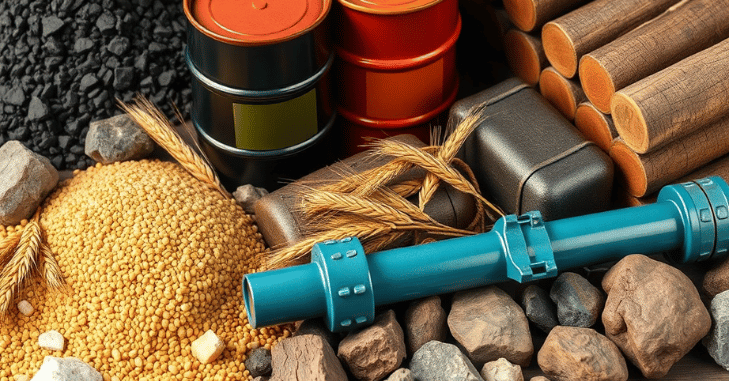
Raw materials are the foundation of basic industries. They undergo minimal processing before being used by other sectors to manufacture finished products. Each category of raw materials plays a significant role in global supply chains.
Mineral Raw Materials
These include iron, copper, zinc, lithium, limestone, and other metals extracted from the earth. They are essential for building infrastructure, electronics, vehicles, and machinery.
Agricultural Raw Materials
Corn, wheat, barley, sugarcane, coffee beans, soybeans, and cotton are widely used in food production, clothing, beverages, biofuels, and pharmaceuticals.
Energy Raw Materials
Crude oil, natural gas, coal, uranium, and biomass fuel global power plants and transportation networks.
Forest-Based Raw Materials
Logs, bamboo, pulp, resin, and paper materials support construction, printing, furniture manufacturing, and packaging industries.
Chemical Raw Materials
Ethylene, methanol, ammonia, sulfuric acid, and plastics are used to make fertilizers, pharmaceuticals, synthetic fibers, and countless consumer products.
Is Basic Industries a Good Career Path?
- Basic industries are considered a good career path for many people due to their long-term stability and strong job demand.
- These industries offer high salaries, hands-on work experience, and steady growth opportunities.
- Global population growth and rapid industrialization in developing countries continue to increase the need for raw materials.
- Basic industries support all consumer and secondary sectors, making them essential to the global economy.
- Even during economic downturns, the demand for food, energy, metals, and chemicals remains stable, offering stronger job security than many other fields.
- These industries provide a wide range of job options, including fieldwork, engineering, laboratory science, management, finance, logistics, and technology-based roles.
- Individuals with diverse interests and skill sets can find suitable opportunities within basic industries.
Reasons Basic Industries Are a Strong Career Choice
Basic industries provide multiple benefits for long-term professional growth. Here are the key advantages.
Steady and Continuous Demand
People will always need homes, roads, vehicles, fuel, food, clothing, and electricity. This means the demand for raw materials never goes away. As a result, industries that extract, grow, or process raw materials remain stable and resilient.
High Salary Potential
Many jobs in mining, chemicals, oil & gas, and energy are known for excellent pay. Skilled workers and engineers in these sectors often earn higher-than-average salaries with additional benefits such as housing, bonuses, overtime, and travel allowances.
Global Job Opportunities
Basic industries operate across the world. Countries like the U.S., Canada, Australia, the Middle East, Africa, and Fiji have strong sectors in mining, oil, agriculture, and forestry. This opens the door for international careers and cross-border projects.
Diverse Job Roles
Whether you are interested in technical roles, engineering, supply chain, safety, environmental monitoring, finance, logistics, or quality control, basic industries offer job diversity unmatched by many other fields.
Promising Career Growth
Large companies in basic industries often have structured training programs, apprenticeships, certifications, and career ladders. Employees can grow from entry level to management or specialize in high-demand technical areas.
Top Careers in Basic Industries

Career options in basic industries are diverse and rewarding. Below are some popular job roles.
Mining Careers
- Mining engineers
- Surveyors
- Metallurgists
- Heavy equipment operators
- Safety managers
(All work to extract and refine minerals.)
Agriculture Careers
- Agronomists
- Agricultural scientists
- Farm managers
- Irrigation specialists
- Food technicians
(All help drive global food production.)
Oil & Gas Careers
- Petroleum engineers
- Drilling operators
- Refinery technicians
- Pipeline inspectors
(Support both exploration and processing.)
Chemical Industry Careers
- Chemical engineers
- Quality control analysts
- Production supervisors
- Laboratory specialists
(Work with essential industrial chemicals.)
Manufacturing & Industrial Careers
- Mechanical engineers
- Plant managers
- Technicians
- Machine operators
(Contribute to raw material processing and production.)
Forestry and Environmental Careers
- Forestry technicians
- Conservation scientists
- Lumber operators
- Environmental specialists
(Maintain forest health and manage wood supply.)
Entry-Level Roles
- Material handlers
- Helpers
- Operators
- Apprentices
- Safety assistants
(Provide hands-on support and learn on the job.)
Skills Needed for Success in Basic Industries
Basic industries require a mix of technical expertise and soft skills.
Technical Skills
These include machine operation, engineering knowledge, chemical handling, production processes, and safety compliance.
Soft Skills
Problem-solving, teamwork, communication, time management, and attention to detail are valuable across all sectors of basic industries.
Certifications
Workers may need certifications in areas such as OSHA safety, industrial equipment operation, chemical management, welding, or engineering qualifications.
Top Companies in Basic Industries (Inc, Ltd, IIC, Pte Limited)

Basic industries include companies with different legal structures worldwide, including Inc., Ltd, IIC, and Pte Limited.
Major Inc Companies
- ExxonMobil Inc.
- Dow Inc.
- ArcelorMittal Inc.
- Newmont Mining Inc.
- Cargill Inc.
(Leaders in oil, chemicals, mining, and agriculture.)
Major Ltd Companies
- Rio Tinto Ltd
- BHP Ltd
- Tata Steel Ltd
- Glencore Ltd
- Wilmar International Ltd
(Operate globally in mining, metals, agriculture, and resource sectors.)
IIC Companies (International Investment Companies)
- Global Resources IIC
- United Mining IIC
- Prime Energy IIC
(Focus on natural resources, energy investments, and mining finance; vary by region.)
Pte Limited Companies
- Pacific Cement Pte Limited
- Fiji Sugar Corporation Pte Limited
- Oceania Gas Pte Limited
- Wilmar Pte Limited
(Common in Asia-Pacific; key players in manufacturing, agriculture, forestry, and raw materials.)
Countries With Strong Basic Industries (Including Fiji)
Several countries excel in basic industries due to natural resources and industrial capacity.
United States
The United States is a global leader in oil, gas, agriculture, chemicals, and manufacturing. It produces primary resources such as corn, soybeans, copper, gold, and rare-earth elements. Strong Inc. companies such as ExxonMobil and Dow support its industrial base, while advanced technology and automation continue to strengthen its basic industries.
Australia
Australia dominates global mining, producing iron ore, gold, coal, and lithium. It also exports major agricultural products like beef, wheat, and wool. With major mining companies such as BHP Ltd and Rio Tinto Ltd, Australia plays a crucial role in supplying raw materials to Asia and the world.
Canada
Canada’s economy is powered by forestry, energy, and mining. The country produces lumber, hydroelectric power, and essential minerals like potash, nickel, and uranium. Agriculture also thrives, with large-scale wheat and canola production. Leading companies like Barrick Gold and Teck Resources operate nationwide.
Middle East
The Middle East leads global oil and gas production, with countries such as Saudi Arabia, the UAE, and Qatar. Giants such as Saudi Aramco dominate the energy sector. The region is also expanding into petrochemicals, metals, and renewable energy as part of long-term diversification.
Fiji
Fiji’s basic industries are developing, primarily through Pte Limited companies. Sugar processing, timber, fisheries, and cement production are key sectors. Agricultural products like taro, ginger, and kava support both local markets and exports.
Advantages and Disadvantages of Working in Basic Industries
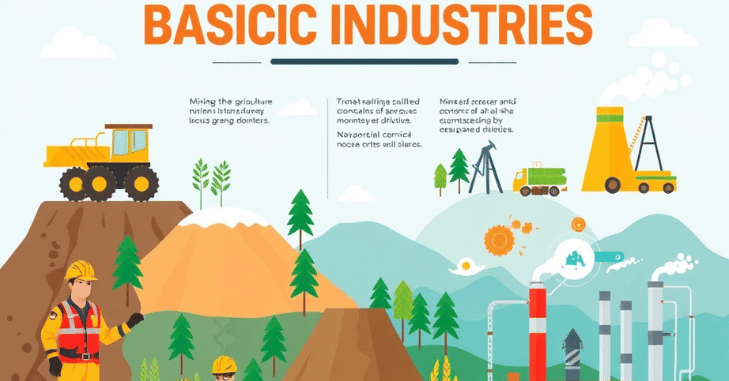
Advantages
Working in basic industries provides high pay, strong job security, hands-on experience, global career options, and room for advancement.
Disadvantages
Some roles may involve physical labor, remote locations, safety risks, and specialized training. However, many companies provide training and prioritize worker safety.
Future of Basic Industries
- Basic industries are rapidly evolving through advanced technologies such as automation, AI, robotics, and smart manufacturing.
- Mining and energy companies are adopting greener, more sustainable processes to reduce their environmental impact.
- Chemical industries are shifting toward eco-friendly materials and cleaner production methods.
- Agriculture is becoming increasingly tech-driven, using smart farming, drones, sensors, and precision tools.
- These technological changes are creating new job roles across engineering, data analysis, automation, environmental science, and digital operations.
- Workers with modern technical skills will have more opportunities and higher career growth in the future of basic industries.
Conclusion
Is Basic Industries a Good Career Path? The answer is a resounding yes for individuals seeking stability, growth, and diverse opportunities. Basic industries form the foundation of the global economy, supplying essential raw materials that keep manufacturing, construction, energy, agriculture, and technology sectors running.
Careers in these industries offer competitive salaries, global job prospects, and a variety of roles ranging from engineering and lab work to field operations and management. With major companies operating as Inc, Ltd, IIC, and Pte Limited, professionals at every level, from entry-level positions to specialized experts, can find rewarding and long-term career paths.
For those looking to contribute to industries that literally build the world, basic industries offer a powerful and promising career choice.
Want to know about Why Price Intelligence Software Is Becoming a Must-Have for Modern Businesses Check out our Business category.
FAQs
The best sector for your career depends on your skills and interests. Still, basic industries like mining, agriculture, oil & gas, chemicals, and manufacturing are strong choices due to their stability, high demand, diverse job roles, and global opportunities.
The iron and steel industry is dubbed the basic industry because all other industries – heavy, medium, and light depend on it for their machinery.
Yes, with its rapid growth, excellent pay, and limitless creative possibilities, technology is one of the most exciting job options available today.













.)