

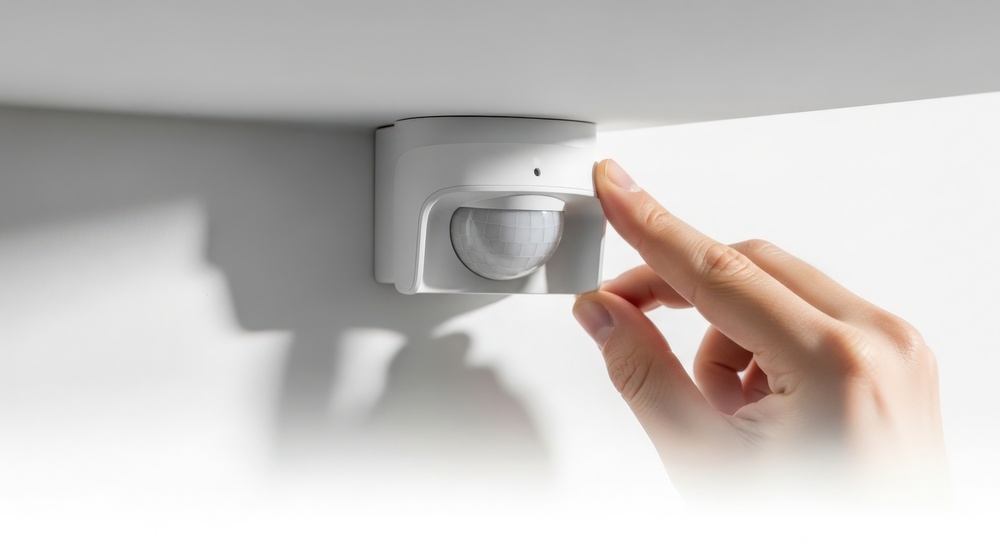
Modern home security offers so many options that it is easy to get lost as you lay out the plan for a new system. For example, redundancy is good, but is it possible to have too much redundancy? It’s a question that’s pretty common when homeowners are considering entry and motion sensors.
Motion sensors are self-explanatory. As for entry sensors, they are small devices attached to windows and doors. A typical home security setup calls for attaching them to every door and window on the ground floor.
So here is the question: If you already have entry sensors on all first-floor windows and doors, do you still need motion sensors? Some people consider adding motion sensors excessively redundant.
Table of Contents
Entry Sensors Play A Vital Role
Answering the redundancy question begins with understanding the role entry sensors play in electronic home security. Door and window sensors rely on a two-part contact system. One piece is installed on the window or door and another on the frame surrounding it. When a door or window opens, contact is broken and the sensor is triggered.
As you might have already guessed, entry sensors are designed for perimeter detection. They alert you the instant a window or door is opened. Meanwhile, the security system sounds an alarm and sends an alert to the monitoring center. They are also helpful overnight when everyone is sleeping. They alert to possible intrusion by a burglar or home invader.
They Have Blind Spots
In theory, entry sensors installed on every window and door in your house would provide maximum perimeter protection. But entry sensors have blind spots:
- Broken Windows – A contact sensor on a window is useless if a burglar breaks the glass and climbs through. As long as contact isn’t broken, an alert will never sound.
- Interior Pathways – While entry sensors can tell you if your perimeter has been breached, they cannot help you figure out where someone is. Motion detectors can actually track movement once someone gets inside the house.
- Second-Story Access – Typically, entry sensors are not placed on the second floor, so all second-floor spaces are wide open to creative burglars willing to work at height.
In regard to that final point, it is more cost-effective to use motion detectors on the second floor. A few strategically placed sensors would cost less than equipping every second-floor window and balcony door with a contact sensor.
Why Motion Sensors Are Still A Good Idea
There is little doubt that entry sensors are one of the most basic components in electronic home security. But according to Vivint Home Security, a nationwide leader in smart home automation, motion sensors are still a good idea. You should still have at least one or two in the house. Here is why:
- Redundancy – Motion sensors add redundancy. At least some redundancy is always good.
- Broad Space Coverage – Motion sensors offer broader protection of more physical space. Put another way, you get extended coverage without needing as many devices.
- Smart Home Integration – Motion detectors can be integrated with an entire smart home system to trigger lights, lock or unlock doors, adjust the thermostat, and just about anything else.
It goes without saying that excessive redundancy is a problem. There is no point in equipping your home with security devices that you don’t need. It also doesn’t make sense to put motion sensors in every room of your house, especially if all of your first-floor windows and doors are equipped with contact sensors. Nonetheless, one or two strategically placed motion sensors can substantially increase the effectiveness of your security system.